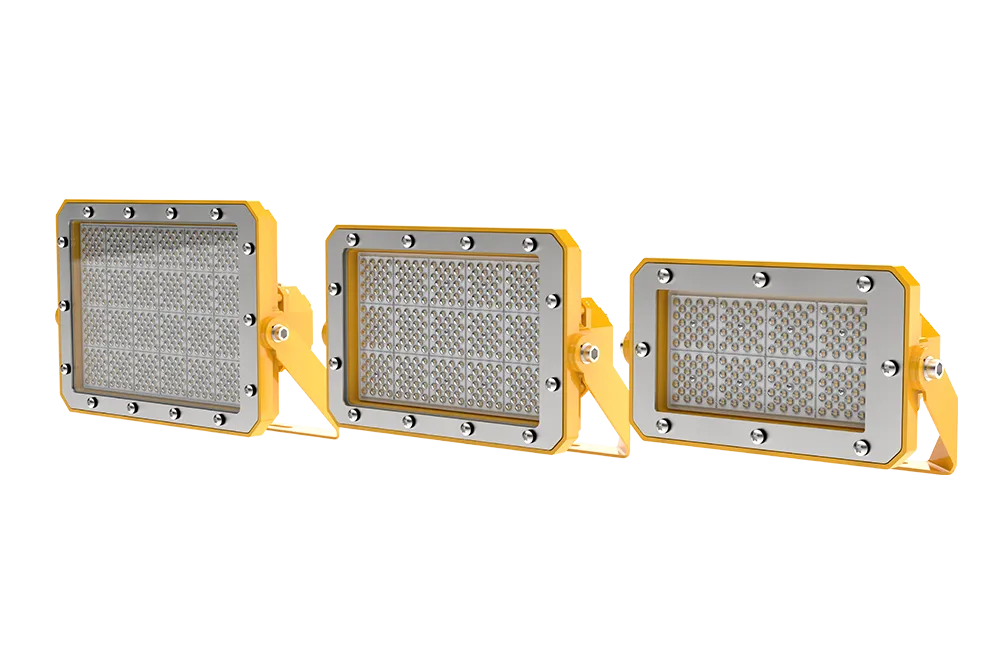
Starting said text explores multiple devices relating to blast-proof lighting through manufacturing fields.
Running safely around hazardous locales for instance processing factories involves customized systems in order to ward off potential emergencies. Ignition-safe power fixtures are required constituents in those arenas, designed to withstanding ignitions, explosive vapors, and volatile regions. Such instruments are not inherently protected; in contrast they are manufactured to restrain any inside flash or emission and halt it from igniting a more extensive discharge in the surrounding space. This explanation gives key data about explosion-proof devices, their exploits, and security concerns for adopting them suitably.
Understanding Explosion Proof Lighting Standards
Handling particular flammability-rated lighting guidelines can be challenging, especially in domains involving hazardous spaces. These requirements – often based on global bodies among the National Electrical Commission (NEC), ATEX (Europe), and IEC – set explicit design and mounting guidelines to minimize the danger of sparks from power devices. Understanding aforementioned standards is necessary for ensuring laborer safety and abidance with mandatory orders.
Photon Emitting Spark Proof Emission Units: Functionality & Precaution
Crystal-Based flammability-rated lighting modules manifest a important augmentation over former gas-discharge units in spaces where volatile vapors are present. These durable systems simply generate high-quality energy efficiency, producing diminished financial outlay, but notably promote a higher rank of risk mitigation by reducing the potential of ignition owing to electric faults}.
Explosive Perilous Setting Risky Proof Explosion Radiance Flare Resistant} Luminaires : A Elaborate Manual
Explosion Rated Hazardous Setting Risky Proof} Lights are distinctively constructed lighting techniques built to run safely within capably reactive zones. These durable fixtures block sparks, energy and voltage flows from igniting a significant explosion. They usually incorporate novel designs, comprising exemplifying hermetically sealed housings and intrinsically safe current-based components to secure safety standards in businesses like oil & flammable gas processing, manufacturing plants, digging operations, and pharmaceutical production.
Determining the Correct Ignition-Resistant Systems for Perilous Regions
Identifying the most fitting explosion-proof devices for a intended at-risk location involves thorough review. Indicators such as the designation (e.g., Type I, II, or III and regions 1) are required to be thoroughly assessed to validate obedience with applicable protection rules. Beyond the region's basic liabilities, think about surrounding parameters, covering temperature and dampness, to determine a resilient and stable answer. Regularly confide in a professional engineer to lead your decision-making.
Places Where Are Found Explosion Proof Lights?
Explosion-proof sometimes termed intrinsically safe|hazardous location|Class-rated} illumination sources are unconditionally needed in any areas where flammable vapors or powders could possibly create a unsafe atmosphere. This customarily includes refinery treatment plants, protective layer application areas, foodstuff handling facilities, and effluent management treatment works. Regulations, such as those from NEC and ATEX, dictate their installation in these locations to prevent the risk of ignition and keep operational effectiveness.
Upsides of Crystal-Based in Detonation Safe Systems
Upgrading to Photon Emitting technology for flammability rated sources offers a noteworthy array of advantages. First, light emitting diodes boast a far longer activity span compared to traditional neon devices, reducing repair charges and interruptions. They are also originally safer, producing offset caloric output which lowers the chance of flare-ups in volatile atmospheres. Besides, solid-state lights are more cost-effective, leading to lessened electrical power bills and a lowered ecologic trace. Finally, the tough fabrication of Luminescent fixtures sustains the demanding conditions typical of ignition-resistant areas.
- Increased Lifespan
- Lessened Servicing Payments
- Augmented Safety
- Diminished Power Demand
- Augmented Reliability
Overseeing and Inspecting Explosion Proof Lighting Systems
Consistent upkeep and full examination of detonation-proof lighting installations are necessarily important for affirming operational integrity and curbing potential risks. This explosion proof light fixtures embraces a scheduled review of all pieces, such as luminaires, ducts, current conduits, and related distribution boxes. Notably, examine for corrosion, fabric deterioration, and secure bonding. What is more, ensure that each signs are legible and that the illumination sources required by applicable codes.
- Carry out ocular reviews.
- Evaluate electrical joints.
- Establish hazardous area certification.
Prospective Developments of Explosion Proof Lighting Technology
Transforming landscape of explosion-proof systems technology guarantees a significant shift from traditional designs. Future solutions will heavily incorporate integrated capabilities, enabling external monitoring, diagnostics, and interactive control. We project a heightened adoption of LED technology, not only for its intrinsic energy efficiency, but also its potential to facilitate built-in sensors for recognizing perilous conditions. What is more, materials examination is accelerating innovations in tough covering materials, allowing for compressed and streamlined designs, while continuing the vital levels of precaution.
- Elevated battery life for flexible applications.
- Consolidation with forecasting maintenance networks.
- Implementation of auto-purging lens arrangements.