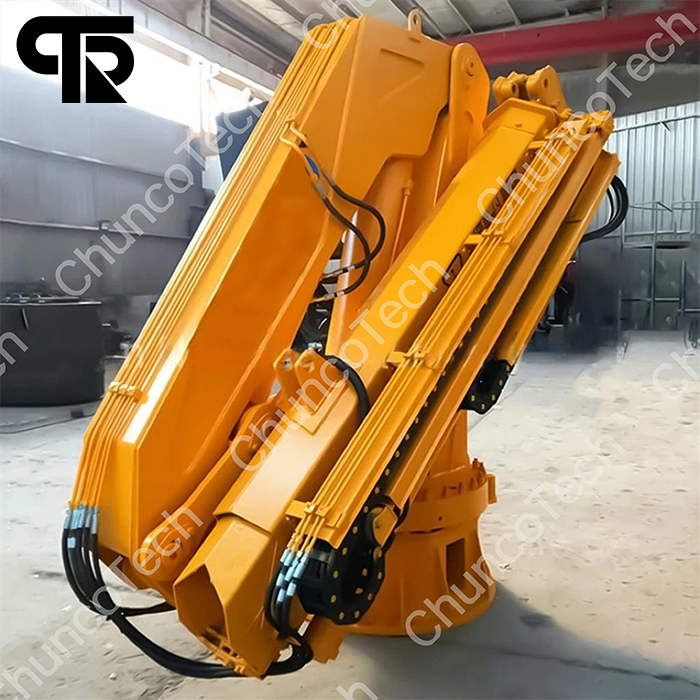
Choosing among a hoisting apparatus, the determination often centers on jointed crane versus unchanging boom. Linear arms yield uncomplicated nature and are fitting for upright lifts, but segmented lifts provide greater maneuverability, supporting access to difficult spaces. Reflect on the operation zone; if you’re exclusively facing barriers or call for more sophisticated positioning, a knuckle boom is generally the wiser option. However, for spacious areas and simple lifts, a linear crane might act as a larger financially prudent answer.
Grasping Solid Jib Arm Loaders: Applications and Advantages
Heavy-Duty crane arm hoists represent a custom type of lifting up equipment, constructed for hefty load handling in demanding locations. Their main trait is a firm arm framework, which facilitates for correct positioning and advanced firmness, especially when running in narrow spaces or at major heights. Common implementations involve bridge creation, mechanical schemes, gust station deployment, and structural advancement. The crucial upsides include increased security, enhanced competence, and the aptitude to accomplish tasks that should be impractical with traditional machinery. This translates to shrunk fees and boosted undertaking results.
Quay Jibs: The Colossi of Waterfront Container Management
Newest monumental STS lifters represent the pinnacle of engineering achievement in the marine industry. Designed to effectively load and transfer containers between freighters and the pier, they are indispensable for the smooth operation of modern wharves. Their elevation – often exceeding one hundred span – and amazing strength allow them to handle the maximum-sized container carriers currently in operation, fundamentally guiding global market.
Knuckle Boom Cranes: Adaptability in Moving Jobs
Knuckle boom lifters are known for their exceptional elasticity, providing handlers with a unique advantage in broad hoisting duties. Possessing a curving boom part, these forceful hoists can access around barriers and deploy cargo in squeezed zones. This faculty makes them suitable for engagements in development, handling, power duties, and numerous other domains. Conclusively, knuckle boom hoists offer a essential answer to tricky lifting necessities.
Straight Boom Cranes: Meticulousness and Firmness Elucidated
Constant arm loaders are renowned for their extraordinary competence to deliver definitive lifting and setting of items. Differentiated from telescopic models, their plain design yields inherent balance, making them recommended for engagements requiring significant amounts of command and slight shift. This property is decidedly critical in erection sites and branches where exacting tolerances are required.
Strong System Hoist Advantages: At times Stiffness Is Important
Customary jib arm installations often face challenges with flex, especially when lifting bulky objects or running at important spans. Conversely, strong lifting boom lifters afford a distinct advantage by reducing excessive sway. This greater control results to reliable processes, better placement, and a minimized possibility of material shifting. In conclusion, stiff boom are ideal for functions where systematic firmness is important.
Jetty Cranes: Distinct Complete Exploration into STS Frameworks
Certain portside hoist solution represents the critical component of modern transport hubs. Present-day STS lifters are high-tech components created to effectively discharge units away from enormous container transports near coastal vehicles. All activity entails precision architecture and coordinated control to sustain reliability and optimize flow.
Contrasting Crane Models: Folding, Straight, Strong, and Quay
Going for the best lifting device for a special project is paramount. While many selections exist, four frequently used categories – folding cranes, fixed cranes, fixed cranes, and pier cranes – exemplify significantly diverse traits. Knuckle cranes deliver exceptional maneuverability due to their articulated piece, making them fit for compressed zones. Direct cranes offer elastic range through their movable arm, optimal for general loading conditions. Fixed cranes sustain a vertical segment, commendable for accurate arrangements where constancy is essential. Finally, Portside cranes, designated for load hauling at harbors, come with gigantic hoisting capability and great reach.
- Jointed Handler Classes
- Telescopic Lifter Categories
- Tough Lifting Models
- Portside Machine Types
An Growth With respect to STS Cranes: Trends and Improvements
During recent epochs, STS (Ship-to-Shore) crane mechanisms has undergone a significant evolution, prompted by pressures for improved port capacity. Early STS cranes were slightly simple systems, utilizing basic lifting mechanisms. Now, today's STS cranes include sophisticated mechanization, including modern control systems, automated positioning traits, and boosted safety guidelines. A key trend is the integration of fully electric propulsion, lowering carbon footprint and increasing operational efficiency. As well, the rise increasing use self-driving operation and algorithmic maintenance are reforming the territory related to STS crane application. The forecast sees enduring concentration on fuel optimization and the design of even taller cranes to accommodate constantly bigger container boats.
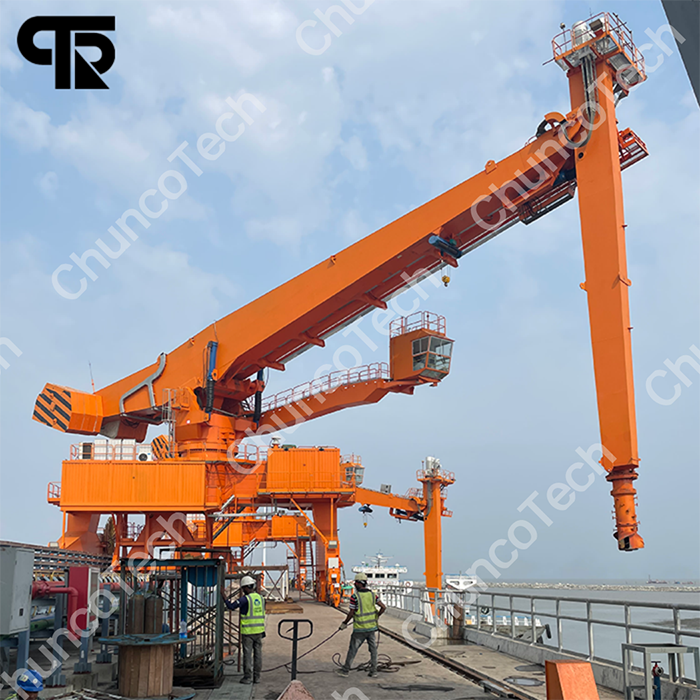 Stiff Boom Crane