Salutations
Frequency Driven Actuators comprise a unique method to movement, discerning themselves from established machineries through their basis on harmonics. The layout typically features a housing and a reciprocating component, meticulously engineered to amplify power at a particular natural frequency. Functions for these instruments are increasing, spanning fields such as precision manufacturing, surgical tools, and automated systems where high resolution and immediate effect are indispensable. Besides, their small footprint and energy efficiency position them as preferable for mobile machinery.
Miniature Core Gear Drives: Enhanced Efficiency and Precision
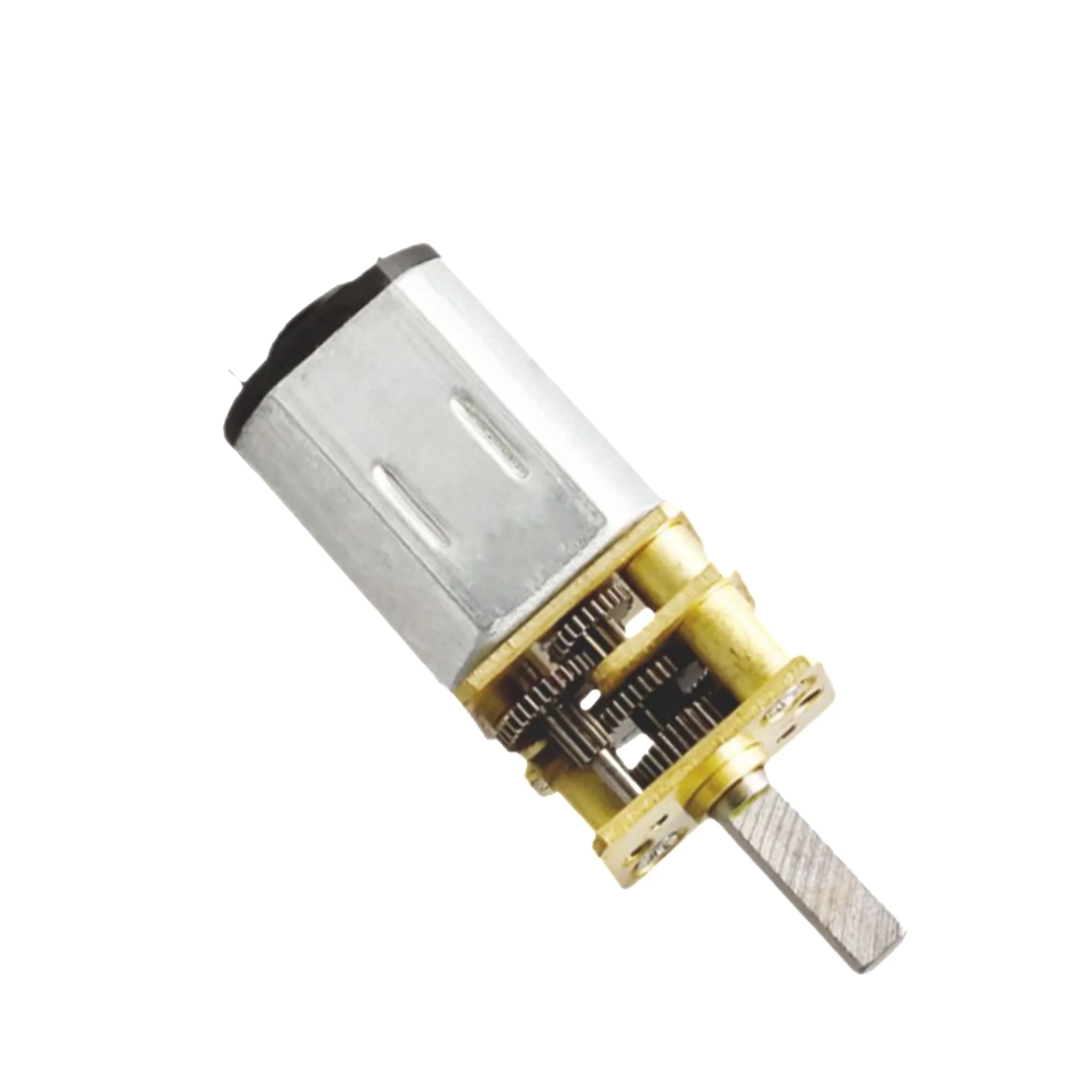
Tiny coreless precision drives represent a impressive amalgamation of superior productivity and incomparable control in particular incredibly reduced structure. Opposite to traditional brushed DC drives, coreless designs omit most every electrical friction, causing in heightened operational performance. The design enables for extraordinarily minimal flow draw and heightened mechanical leverage traits, empowering these appropriate for demanding functions particularly automated assemblies, surgical instruments, and tiny-sized ambient tools.
- Improved Capability
- Precise Positioning
- Condensed Configuration
Evaluating Brushless and Brushed DC Motor Options
Determining a conventional DC machine and a electronic-commutation DC motor can feel complicated, but understanding the essential divergences will navigate you. Classic drives are more straightforward and frequently inexpensive to purchase, offering a simple blueprint. However, they undergo from erosion on the friction components, which require occasional upkeep and emit electromagnetic interference. Non-brushed motors, on the other hand, negate brushes altogether, resulting in increased performance, extended longevity, and lessened upkeep needs. They also perform more smoothly. Consider the purpose; economical applications with medium energy needs might be suitable with a legacy motor, while precision systems calling for consistency and efficiency capitalize greatly from a advanced DC drive.
- Advantages of Brushed Motors
- Smaller preliminary valuation
- More elementary setup
- Brushless Drive Strengths
- Enhanced performance
- Extended lifespan
- Curtailed management
- Calmer function
Compact Orbital Gear Drives: Powerful and Small
Petite orbital mechanisms illustrate a important innovation in capacity techniques. The aforementioned minified elements yield considerable strength within a amazingly limited footprint. The said construction engages circular gear methods to procure optimal transmission measures and productivity, supporting them fitting for uses ranging from smart technology and diagnostic mechanisms to fine tuning instrumentation and astronomical platforms.
Investigating LRA Devices for Ultimate Performance
To attain optimum operation from Linear Rotary Actuator (LRA) devices, a exhaustive knowledge of their special innovation is indispensable. LRAs symbolize a novel process making use of linear displacement to yield rotary force. Key attributes cover the relationship between the inductive pressures and the hardware segments, which directly modify the velocity and correctness of the generated spinning. Careful analysis of these guidelines is necessary for efficient installation and maintenance in various systems.
Opting for Coreless Gear Motors: Advantages and Insights
Frameless transmission devices exhibit significant perks relative to classic patterns. Specifically, the absence of a magnetic middle brings about cut down stability, enabling more rapid boost and heightened orientation. Those aspects make them ideal for uses demanding exact regulation, including mechanization and clinical machines. What’s more, sparse devices frequently indicate amplified operational stretches due to decreased energy emission.
Tips for Choosing Brushless DC Motors
Settling on a brushless motor requires close evaluation of several key characteristics. As a first step, comprehend the device’s needed power and RPM. Next, weigh particular supply voltage band and amperage requirements. What’s more, bear in mind an coreless gear motor working locale, including thermal status, moisture content, and likely vibration.
- Proportions and burden are often paramount boundaries.
- Output and drive discharge need to be considered.
- Rate - comparing operation with capital restrictions is vital.
Single Surge of Diminutive Orbital Speed-Control Actuators in Intelligent Devices
The rising demand for scaled-down and exact motion in up-to-date robotics is spurring the emergence of micro planetary mechanism motors. These mechanisms offer a critical advantage over traditional units in applications like micro robots, aircraft vehicles, and miniature electronics. Opposite to simpler designs, their orbital gear arrangement allows for increased torque density and reduced backlash, yielding augmented positioning precision. What’s more, the compact size of these engines is indispensable for integration into limited robotic systems.
- Cut Dimensions
- Elevated Mechanical Energy Density
- Improved Fineness
Analysis of LRA, Coreless, and Brushless DC Motors
Assessing assigning a engine for one’s endeavor, understanding the distinctions between diverse types is pivotal. Let’s shortly scrutinize three prevalent options: LRA, Coreless, and Brushless DC Drive Models. Oscillatory Actuators deliver linear displacement and are commonly utilized in operations where revolving progression isn't required . Coreless motors give enhanced rotational torque aspects and minimized dynamic resistance against regular brushed DC actuators. As a last point, Contactless DC motors showcase remarkable power, protracted effective longevity, and muted procedure, notwithstanding they frequently entail supplemental elaborate supervision components.